There is no such thing as a building inspector’s licence in New South Wales. There hasn’t been one since 2009.
Anyone can order a business card, buy a torch and start charging homeowners around Lake Macquarie for a pre-purchase report. A house in Warners Bay, a unit in Belmont, a new build at Cameron Park. No qualification is required. No trade background is required. No insurance is required. So, when an inspection company tells you its people are licensed, there’s only one question worth asking, and it’s this. Licensed as what?
What Changed in 2009
It used to be regulated, and properly so. Inspecting a dwelling and reporting on its condition for a fee was defined in the Home Building Act 1989 as building consultancy work, and doing it meant holding a building consultancy licence issued by Fair Trading.
That licence was abolished. The Occupational Licensing Legislation Amendment (Regulatory Reform) Act 2009 struck building consultancy work out of the Act, and from 16 September 2009 it stopped being regulated. The NSW Government still has the page explaining it, filed under work no longer regulated by the Home Building Act. It was part of a national push to cut red tape across occupational licensing.
Nothing replaced it.
AS 4349.1 sets out how a pre-purchase inspection of a residential building should be scoped and reported, and it’s a good standard. It’s also a standard rather than a law, so nothing compels an inspector to follow it. Professional indemnity insurance isn’t mandatory either. The pest side is no different in practice: the EPA licence a pest technician holds covers applying pesticides, so a visual timber pest inspection with no chemical involved sits outside it too.
Which means every credential in this industry is now voluntary. Builders Licence 260201C is one we chose to hold and keep current, and the only reason it means anything is that you can go and check it.
How to Check Anyone, Us Included
The NSW public register is free and takes about a minute. Go to the licence check on verify.licence.nsw.gov.au and search by name or licence number.
Four things are worth reading when the record comes up.
- Status. It needs to say current. Expired, suspended and cancelled all mean what they say.
- Class. A contractor licence is not the same as a tradesperson certificate. Only the first lets someone contract for building work in their own right.
- Conditions. Any restrictions endorsed on the licence show here, along with cautions and prosecutions.
- Expiry. Licences lapse. A number on a website is not proof the licence behind it is still live.
Then ask for a certificate of currency for professional indemnity insurance. Since nobody is legally obliged to carry it, asking is the only way to find out, and an inspector who has it will send it across without blinking.
What Thirty Years on the Tools Changes in a Report
Trade background isn’t a badge. It changes what an inspector can tell you, in four practical ways.
It gives you the era. Look at a wall and you know roughly when it went up and what was normal practice then. A cavity brick cottage in Toronto ages nothing like a brick veneer home in a Cardiff estate, and the defects that matter in each are different defects.
It gives you sequencing. Buildings get added to. Knowing the order things were built in is how you tell an original wall from a later one, and how you work backwards from a stain to the point where water is getting in rather than the point where it is coming out.
It gives you the line between a defect and a period detail. A checklist writes up everything that differs from current practice. Someone who worked through those decades knows which of it was standard at the time, has performed fine for forty years, and does not belong at the top of your worry list.
And it gives you proportion. Having done the repair is what lets a report tell you this one is a weekend and a few hundred dollars, that one is a builder, and this third one needs a structural engineer before anybody quotes anything. Our pre-purchase building and pest inspections are written to be used that way, as a decision tool rather than a list of alarms.
We Don’t Do the Repairs
This part is structural rather than a promise about character, which is worth more than any assurance we could give you.
There is no repair work in this business. No maintenance arm, no preferred trades taking a cut, no treatment contract waiting at the end of a termite finding. When a finding gets written up it has nowhere to go except into your report, because there is nothing for it to feed.
The practical effect shows up in small ways. Reports that say plainly when an item is cosmetic and can wait. Phone calls that end with a suggestion you probably don’t need an inspection at all for what you are describing. Neither of those is good business if you sell repairs. Both are the right answer if you sell information.
Four Questions Worth Asking Before You Book
These take a phone call, and they sort the field quickly.
- What is your licence number, and what class is it? A number given without hesitation is a good sign on its own.
- Do you carry professional indemnity insurance, and can you send the certificate of currency? Nobody has to. Plenty don’t.
- Does your report follow AS 4349.1, and will it state what you could not inspect? The second half matters as much as the first. A report that never mentions limitations is hiding them.
- Do you or anyone you refer to carry out repairs or treatments? Not a disqualifier by itself, but you want to know before you read the findings.
Any inspector worth booking will answer all four without getting prickly about it.
Accreditation, in an Industry with No Licence
Lake Macquarie Building Inspections is an accredited member of the Australian Society of Building Consultants, one of a small number in the Newcastle and Hunter regions, and a member of the Housing Industry Association. Both are voluntary. In an industry where the compulsory bar sits at zero, voluntary accreditation, a current trade licence and insurance you can see the paperwork for are close to the whole of what a buyer has to judge on. More detail sits on our about page.
What Comes as Standard
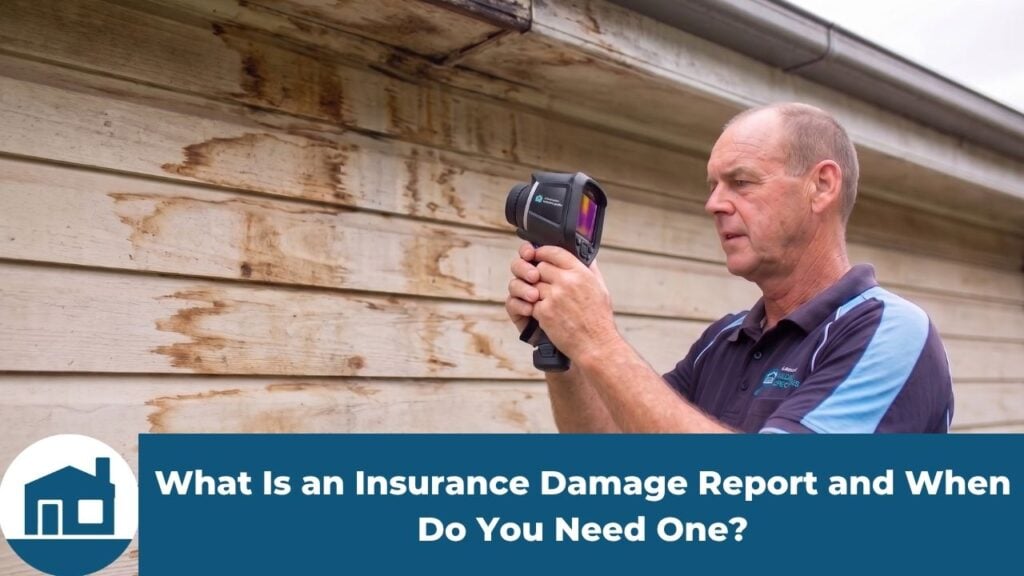
Thermal imaging runs on every inspection rather than sitting on the invoice as an extra. A camera reads heat and moisture behind wall linings, under floors and in roof cavities, which is where termite activity and slow leaks live long before anything shows on the surface. Our thermal imaging page goes through what it picks up and what it cannot.
Rapid methamphetamine testing can be added to any inspection, carried out in line with the Australian Government’s clandestine drug remediation guidelines. It is the sort of thing nobody thinks about until it is too late to think about it.
Written reports land within 12 hours of the inspection. Then we ring you and go through it, for as long as it takes, so you know which findings change the decision and which ones are noise.
Booking an Inspection Around Lake Macquarie
We inspect around the lake at Belmont, Swansea, Toronto, Morisset, Charlestown and Warners Bay, across Newcastle, and out through Maitland, the Hunter Valley, the Upper Hunter, Port Stephens, the Central Coast and the Mid North Coast. Houses, units, townhouses, villas, strata, and commercial premises.
Call Stuart on 0418 688 840, Order an Inspection, or get an Instant Quote. And before you book anyone, ours included, go and look up the licence.