
Your house is probably the largest thing you own, and it’s the only major asset most people never have independently assessed between the day they buy it and the day they sell it. Cars get serviced. Super gets reviewed. The building just sits there getting slowly worse in ways nobody is watching.
If the home is newish, there’s a sharper reason to pay attention. Two legal clocks start ticking the day building work is completed, and once they run out, every defect in the place becomes yours to pay for. Most owners have a vague sense they have a builder’s warranty. Few know how long it lasts, and almost nobody has the date written down.
That’s the single most useful thing a building maintenance inspection can do for a newer home, and it’s the part of the conversation that usually gets skipped.
Builders Warranty in NSW: The Two Clocks on a Newish Home
Under the Home Building Act 1989, residential building work in NSW comes with statutory warranties that a builder cannot contract out of. Section 18E sets how long you have to act on a breach, and it splits into two periods.
Six years for a major defect. Two years for everything else. Both run from completion of the work, not from when you bought the place.
A major defect broadly means a defect in a major element of the building, caused by defective design, workmanship, materials or a failure to meet the structural performance requirements of the National Construction Code, that causes or is likely to cause the building to be uninhabitable, destroyed, or threatened with collapse. Foundations, walls, roofs, waterproofing and fire safety sit in that territory. A cracked cornice or a poorly hung door does not.
Two details matter a great deal and are widely misunderstood.
The warranties run with the property, not the original owner. If you bought a four year old house last year, you inherited whatever is left of those periods. You did not start a fresh clock and you did not lose the benefit because you weren’t the one who signed the build contract.
And if a breach only becomes apparent in the last six months of a warranty period, you get an extra six months beyond the end of it to commence proceedings. That is a narrow safety net, not a general extension.
Why the Two Year Mark Is the One People Miss
Six years feels like plenty of time. Two years does not, and two years covers the great majority of what goes wrong in a new build.
Think about what shows up in the first couple of years. Shower bases that were never going to hold. Tiling that has drummed and lifted. Render cracking along a control joint that was put in the wrong place. Downpipes discharging against a slab edge. Weep holes bridged by a landscaper. Poor fall on a balcony. Windows that leak in driving rain from the south.
Almost none of that meets the major defect test. Almost all of it is a breach of statutory warranty. And all of it sits inside a two year window that expires quietly while you’re still putting up curtains.
An owner who has a proper inspection at around eighteen to twenty two months has time to give the builder written notice and let them rectify. An owner who first looks at thirty months is negotiating from nothing.
What an Inspection Does Inside That Window
The value is not the list. It’s the timing and the wording.
A defect found inside the warranty period, described accurately, tied to the relevant element and the reason it’s defective, is a document you can hand to a builder. A defect found afterwards is a quote you pay.
Building Commission NSW is clear that you should try to resolve the matter with the builder first, and that written notice matters. If it can’t be resolved, a homeowner can make a complaint through Service NSW, and if the warranty period is nearly up, lodging with the NSW Civil and Administrative Tribunal preserves your position while the complaint process runs.
None of that works without a dated, competent description of the defect. That is the whole point of getting a builder to look at it rather than working from a phone photo and a bad feeling.
After the Warranty Runs Out, It’s All Yours
Most homes across Lake Macquarie are well past both periods, and the case for regular inspection changes rather than disappearing.
At that point you’re managing a depreciating structure with your own money, and the argument is that early costs less. Flashing replaced before it lets water into a wall cavity is a tradesman for an afternoon. The same failure found two winters later is framing, plasterboard, paint and possibly a mould remediation.
What you get from a building maintenance inspection is a condition record with the items ranked by urgency, so you can spread the spend across a few years rather than reacting to whatever fails first. Owners who do this stop getting surprised, which is worth more than any single repair.
What Gets Checked
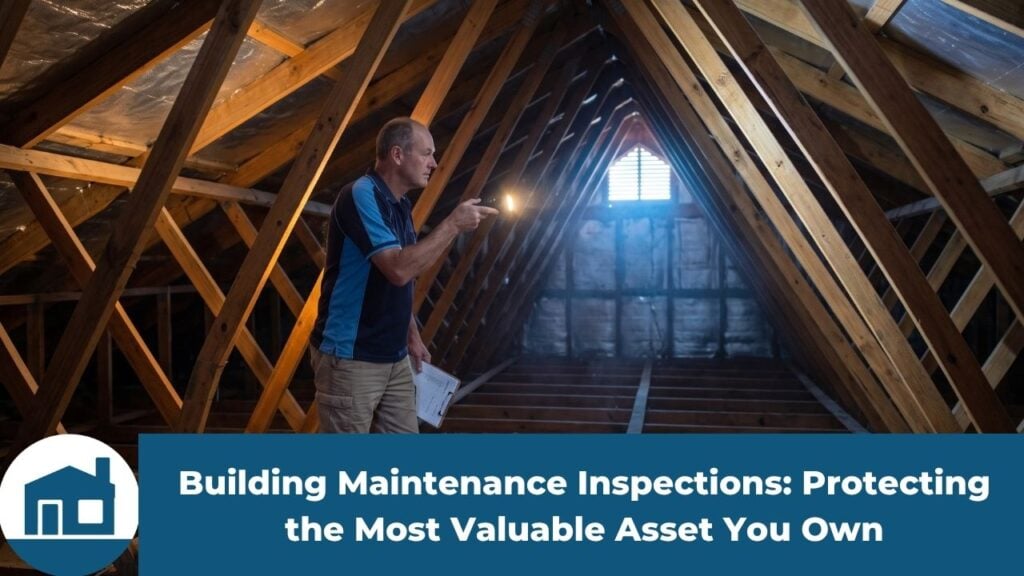
An inspector gets into the parts of the house you don’t. Roof space, subfloor, the roof exterior, wet areas, external walls, drainage and the site around the building.
Moisture readings and thermal imaging matter here more than most people expect, because water behind a lining does its damage for months before anything appears on a ceiling. Timber pest activity gets assessed at the same time if you book both together. Between inspections, our spring maintenance checklist covers what you can reasonably look at yourself.
Around Lake Macquarie
The newer estates through Cameron Park, Killingworth, Fletcher and around Morisset are where the warranty question bites hardest, because a large number of those homes were completed recently enough that one or both clocks are still running. If your place was finished in the last couple of years and you have never had it independently looked at, that is the phone call to make first.
The older stock is a different job. Post-war and mid-century housing around Toronto, Boolaroo and Speers Point has no warranty left and thirty or fifty years of accumulated movement, alterations and patching to read instead. Both need looking at. They need looking at for different reasons.
How Often
For a home outside the warranty periods, every two to three years suits most owners, or annually if the building is older, tenanted or on a difficult site.
For a newer home, forget the interval and work to the dates. One inspection before the two year mark, and another before six years if there’s any sign of structural movement. Find your completion date and put both in your calendar, because nobody else is going to remind you.
Book a Building Maintenance Inspection
We are licensed builders first and inspectors second, which is the relevant qualification when the question is whether something was built properly rather than just whether it looks tired.
Call 0418 688 840 or order an inspection online, and have your completion date handy if the house is newish.
This article is general information about how statutory warranties work. It is not legal advice. If you are considering a claim, get advice about your circumstances, and check the current position with Building Commission NSW before relying on any timeframe.