The contract for sale of land in New South Wales arrives with a pack of attached documents, and most buyers read it as the property’s full disclosure. It isn’t. Those documents cover the title, the zoning, the sewer line, whether the land sits in a mine subsidence district and whether the pool has been certified. Not one of them describes the condition of the building. A vendor here has no general duty to tell you the roof leaks, the subfloor is rotting, or that there are termites in a wall frame.
That gap isn’t an oversight. It’s how property sales work in this state, and it’s the most expensive thing buyers misunderstand before they sign. Here’s what the contract covers, what it leaves out, and how to close the difference while you still have a choice.
What does the contract of sale disclose?
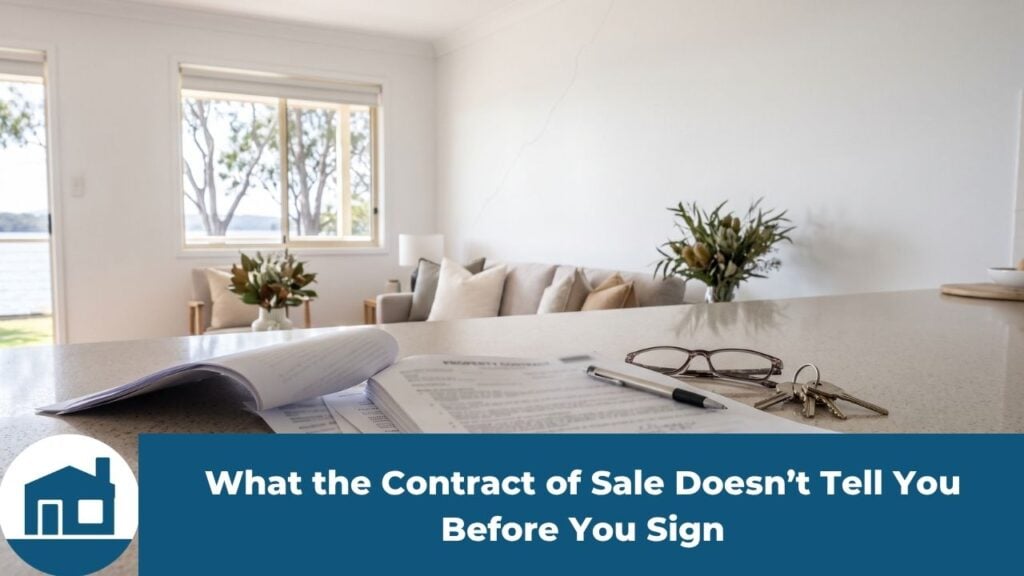
A NSW contract for residential property must have a set of prescribed documents attached before the property can be offered for sale. They’re listed in Schedule 1 of the Conveyancing (Sale of Land) Regulation 2022, and they deal with title, planning and services. None of them deals with the building.
| Attached document | What it tells you |
|---|---|
| Title documents and plan | Who owns the land, where the boundaries run, easements and covenants |
| Section 10.7 planning certificate | Zoning, planning controls, flood and bushfire status, mine subsidence district status |
| Sewerage diagram | Where the sewer main runs beneath the property |
| Pool certificate, where there’s a pool | Whether the pool barrier has been certified, or has not |
A section 10.7 planning certificate is a council-issued document setting out the zoning and planning controls that apply to a parcel of land. It’s detailed on what you’re allowed to build. It’s silent on what’s already standing there.
Does the vendor have to tell you about defects?
No. The physical condition of a property in NSW sits under the principle of caveat emptor, or buyer beware. A vendor has to disclose prescribed title and planning matters, and can’t actively mislead you about the property, but there’s no general obligation to volunteer that the shower has been leaking into the wall cavity for three years.
In practice that means a freshly painted wall is a legitimate sales tactic and finding the crack underneath it is your job. The agent works for the seller. The contract documents answer legal questions. Neither is going to raise the subfloor.
The mine subsidence line most buyers misread
Four separate mine subsidence districts cover the suburbs around the lake. The Lake Macquarie district takes in Cardiff, Charlestown, Warners Bay, Belmont and Edgeworth. West Lake covers Toronto, Morisset, Wangi Wangi, Rathmines and Cooranbong. Swansea North Entrance picks up Swansea, Caves Beach and Catherine Hill Bay, and the Lake Macquarie No 1 Extension adds more again.
Buy anywhere in them and your 10.7 certificate will say so. The line throws people, so it’s worth being precise about it. A mine subsidence district is an area declared under the Coal Mine Subsidence Compensation Act 2017 where Subsidence Advisory NSW approval is needed before new building work goes ahead, and where a statutory compensation scheme covers subsidence damage.
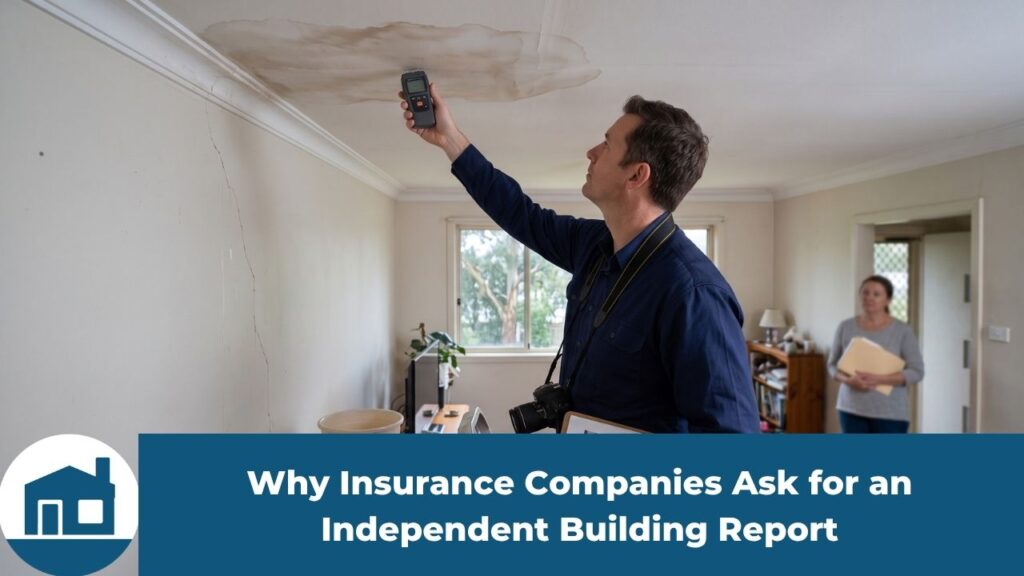
What it isn’t is a statement about the house you’re looking at. The certificate records the status of the land, not the condition of what’s built on it. It won’t tell you whether the footings have moved, whether the diagonal crack above the window is old settlement or current movement, or whether someone patched and painted over it before the first open home. Those are questions for a licensed builder in the subfloor with a torch.
What about the pool certificate?
A property with a pool or spa must have one of three documents attached to the contract: a valid certificate of compliance, a relevant occupation certificate with evidence the pool is registered, or a certificate of non-compliance.
That third option is the one to watch. Where a certificate of non-compliance is attached, the vendor has handed the problem to you. You get 90 days from settlement to rectify the listed defects and obtain a compliance certificate. Barrier work, gate latches and fence replacement on a pool at Belmont North or Valentine can run well past what buyers budget for, and the bill lands after you’ve already paid for the house.
How long do you have to check?
The cooling-off period on a NSW residential purchase is five business days, ending at 5pm on the fifth business day after exchange. Buy at auction and there’s no cooling-off period at all. How much time you get to check a property depends entirely on the way you buy it.
| How you buy | Cooling-off period |
|---|---|
| Private treaty | 5 business days, ending 5pm on the fifth business day after exchange |
| Off the plan | 10 business days |
| At auction | None |
| Same day after the property is passed in | None |
| After giving a section 66W certificate | None, the right is waived |
Pulling out during a cooling-off period costs you 0.25 per cent of the purchase price. On an $850,000 house at Warners Bay that’s $2,125, which is real money and still a long way short of a re-roof or a termite-damaged wall frame.
The practical point is about sequence. If you’re bidding at auction, or the agent is pushing for a section 66W certificate to make your offer competitive, there is no cooling-off period at all and your inspection has to happen before you sign. Our pre-purchase pest and building inspection reports are delivered electronically within 12 hours of the inspection, which is what keeps a five day window usable.
What an inspection covers that the contract doesn’t
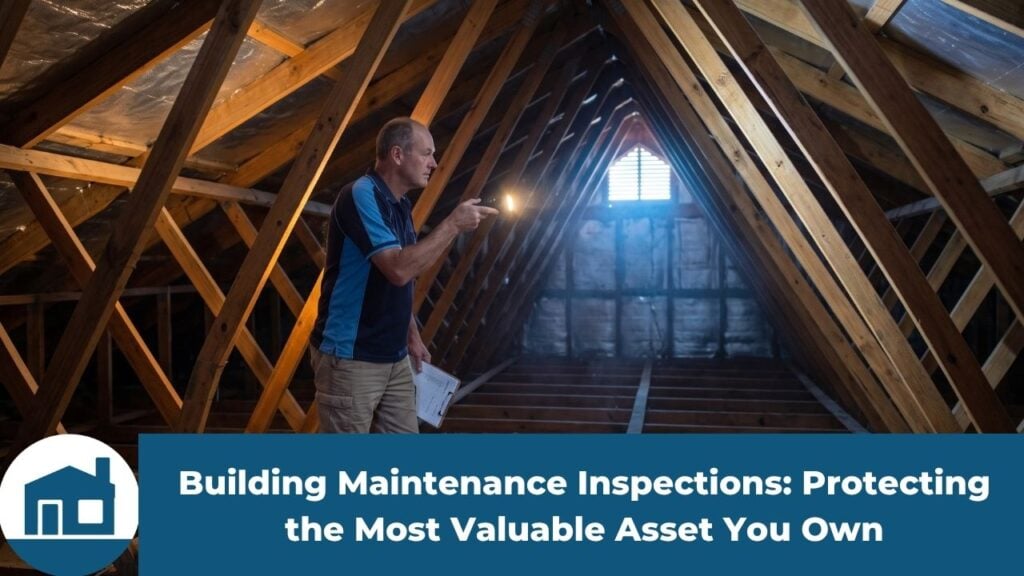
A pre-purchase inspection is carried out to AS 4349.1-2007, Inspection of Buildings, Part 1: Pre-Purchase Inspections, Residential Buildings. The timber pest component follows AS 4349.3. Both are visual assessments of the readily accessible areas of the building and site, looking for major defects, structural damage and the conditions that cause it.
| The contract answers | The inspection answers |
|---|---|
| Is the land in a mine subsidence district? | Has this building moved, and is it still moving? |
| Does a sewer main cross the block? | Is there moisture in the subfloor, and where is it coming from? |
| Is the pool barrier certified? | Is the deck, pergola or carport structurally sound? |
| What are the zoning and planning controls? | Was that extension built properly? |
| Who holds title to the land? | Are there termites, and is there old damage from a previous attack? |
Be clear on the limits as well. A visual inspection doesn’t open walls, lift floorboards or excavate footings, and it reports what can be seen and reached safely on the day. Thermal imaging extends what can be assessed without cutting into anything. What the inspection does is find the five-figure problems in the category the contract says nothing about.
Booking an inspection
We’re licensed builders registered with NSW Fair Trading, and we inspect across Lake Macquarie, Newcastle, the Hunter Valley, Port Stephens, Maitland and the Central Coast. If you’ve got a contract in front of you, or an auction date coming, Order an Inspection first and read the report before you commit. Selling instead? A pre-sale vendor inspection finds the same things while you still control the timing.
Frequently asked questions
Is a building and pest inspection compulsory in NSW?
No. There’s no legal requirement to get one, and no requirement for a vendor to provide one. It’s commonly written into the purchaser’s contract as a condition, but the decision to inspect, and the cost of skipping it, both sit with the buyer.
Does a section 10.7 certificate show building defects?
No. A section 10.7 planning certificate covers planning matters: zoning, permitted uses, flood and bushfire status, mine subsidence district status and similar controls. It’s issued by the council about the land. It carries no assessment of the structural condition of any building on it.
Can I get an inspection before contracts are exchanged?
Yes, and on an auction purchase you have to. Arrange access through the agent during the campaign. For a private treaty sale you can inspect before exchange or inside the cooling-off period, though the earlier report gives you more room to negotiate.
Does a mine subsidence district mean the house is damaged?
No. It’s a planning status covering a large area, not a finding about an individual property. Thousands of homes around the lake sit inside a district without any subsidence damage. It does mean future building work needs Subsidence Advisory NSW approval.
What happens if the pool has a certificate of non-compliance?
The obligation transfers to you at settlement. You’ll have 90 days to rectify the defects listed on the certificate and obtain a certificate of compliance. Price that work into your offer rather than discovering it afterwards.
This article is general information about the property purchase process in New South Wales. It isn’t legal advice. For advice on a specific contract, speak with your solicitor or licensed conveyancer.