
Lake Macquarie’s combination of water proximity, coastal humidity and a significant proportion of older housing stock creates conditions where mould is a persistent and widespread issue across the region. Properties along the lake foreshore, in low-lying suburbs and in older homes with limited sub-floor ventilation are particularly vulnerable. Mould growth is often more extensive than it appears on the surface and the moisture source driving it is frequently hidden within the building fabric.
Stuart and the team at Lake Macquarie Building Inspections carry out thorough, non-invasive mould inspections across the Lake Macquarie local government area. As licensed builders, we bring genuine construction knowledge to every mould assessment and look beyond the visible symptoms to identify the underlying building issues causing the problem.

The microclimate around Lake Macquarie keeps ambient humidity elevated for much of the year. Properties on the eastern and western shores of the lake, in suburbs like Valentine, Rathmines, Speers Point and Toronto, experience persistent moisture conditions that promote mould growth in any building element that lacks adequate ventilation or waterproofing. Sub-floor spaces beneath older homes are a particular concern, where groundwater proximity and limited airflow can sustain dampness that drives mould through floor structures and into the living areas above.
The region also has a large volume of brick veneer and fibrous cement homes built from the 1960s through the 1980s that were not designed with modern ventilation standards in mind. These properties frequently have inadequate sub-floor vents, limited roof cavity airflow and bathroom extraction systems that do not meet current requirements. Without adequate ventilation, moisture generated within the home has nowhere to go and mould follows inevitably.
A mould inspection is a professional, non-invasive assessment of a property to identify the presence, extent and underlying cause of mould growth. Unlike a surface clean, which treats the symptom, a mould inspection identifies the moisture source and building conditions that are enabling the mould to grow. Addressing these underlying causes is what prevents the mould from returning after treatment.
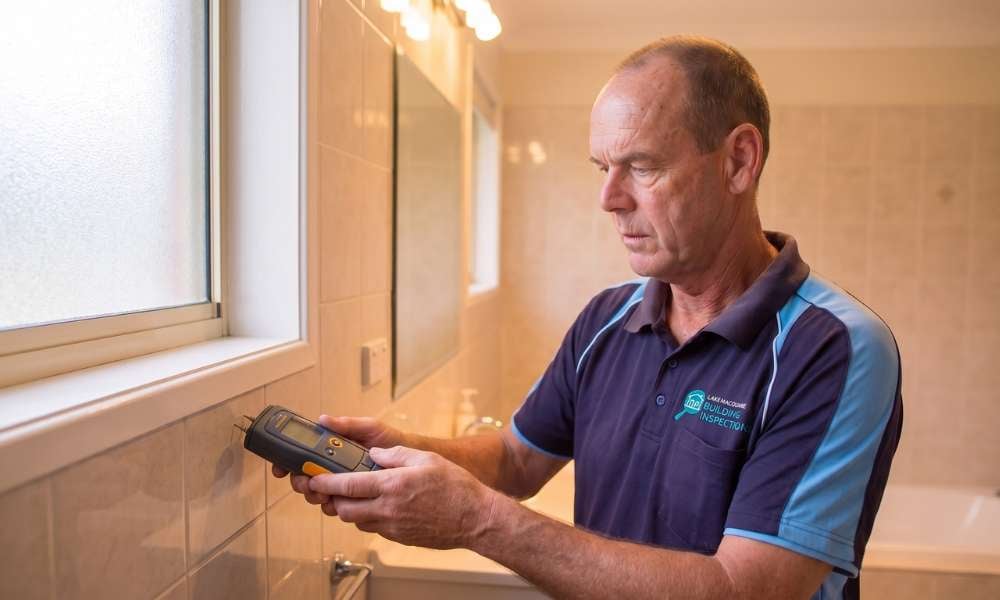
Our inspections use calibrated moisture meters alongside a thorough visual assessment to locate elevated moisture levels in wall linings, floor substrates, ceiling areas and wet spaces. We do not need to cut into walls or remove linings to carry out the assessment. The inspection is completely non-invasive and does not cause any disruption to the property.
Thermal imaging is used in conjunction with the moisture assessment to identify heat and moisture signatures behind linings that indicate concealed dampness, leaks or insulation gaps contributing to condensation.
Your mould inspection report is delivered electronically on the same day as the inspection. It documents all areas of mould growth found, moisture readings taken, the likely contributing causes of each finding and practical recommendations for addressing the problem at its source. The report is written in plain English and gives you a clear action plan rather than a list of problems with no practical guidance.
Because Stuart and the team are licensed builders, the advice in the report reflects a genuine understanding of how buildings work, how moisture moves through them and what building interventions are needed to resolve the conditions driving mould growth.
If you have visible mould in your home or a persistent musty odour that keeps returning after cleaning, a mould inspection identifies why it keeps coming back and what needs to be done to stop it.
Where a tenant has raised a mould complaint, an independent inspection gives landlords a factual, documented assessment of the property’s condition and clear advice on whether the mould is a result of a building defect or a ventilation issue. This protects all parties and provides the evidence base to manage the complaint fairly.
If you notice musty odours or visible mould during an open home, a dedicated mould inspection before purchase establishes the extent of the issue and the likely cost of resolving it, giving you the information you need to proceed with confidence or renegotiate accordingly.
Lake Macquarie Building Inspections provides a full range of pest and building inspection services across the Lake Macquarie:
We carry out mould inspections across all suburbs within the Lake Macquarie local government area, including:
Valentine | Rathmines | Speers Point | Toronto | Warners Bay | Charlestown | Belmont | Gateshead | Cameron Park | Edgeworth | West Wallsend | Morisset | Cooranbong | Cardiff | Swansea | and all surrounding suburbs within the Lake Macquarie LGA