
The Mid North Coast is one of the highest-risk areas for termite activity in New South Wales. The region’s subtropical climate, high annual rainfall, extensive areas of native coastal forest and the warm, humid conditions that prevail for much of the year create an environment that is exceptionally favourable to termite colonies. For property owners across the region, including communities such as Karuah, Tea Gardens and Hawks Nest where bushland-adjacent locations are common, annual professional timber pest inspections are not optional. They are the minimum standard of protection.
Stuart and the team at Lake Macquarie Building Inspections carry out timber pest inspections across the Mid North Coast region in accordance with Australian Standard AS 3660.2. We use professional-grade thermal imaging on every inspection and deliver comprehensive, same-day reports with clear findings and actionable recommendations.

The combination of factors that create elevated termite risk in the Mid North Coast is more concentrated here than in almost any other region of the state. Subtropical temperatures allow termite colonies to remain active for longer periods of the year than in cooler climates. High annual rainfall and the region’s waterway and coastal environment maintain the soil moisture conditions that support large and expanding colonies. The extensive areas of native rainforest, coastal scrub and riparian vegetation throughout the region provide an abundant and continuous cellulose supply that sustains well-established colonies close to residential areas.
Properties in estuarine communities including Karuah, Tea Gardens and Hawks Nest are surrounded by the kind of bushland, waterfront and riparian vegetation that harbours some of the most active termite populations in the state. Annual inspections for these properties are strongly recommended as the minimum, with more frequent assessments warranted for high-risk properties or those with no active management system.
Holiday and weekender properties across the region face additional risk from the extended periods of vacancy during which termite activity can develop and progress substantially before being noticed.
Our timber pest inspections cover all accessible areas of the property in accordance with Australian Standard AS 3660.2:
Given the region’s termite pressure, annual timber pest inspections are strongly recommended for every property on the Mid North Coast. Properties in the highest-risk locations, particularly those close to native bushland, waterways and areas of natural vegetation including communities such as Karuah, Tea Gardens and Hawks Nest, benefit from inspections every six months.
An active termite management system in place does not remove the need for annual inspections. The system’s performance needs to be monitored regularly to ensure it is functioning effectively and that no new activity has established within or around the building since the last inspection.
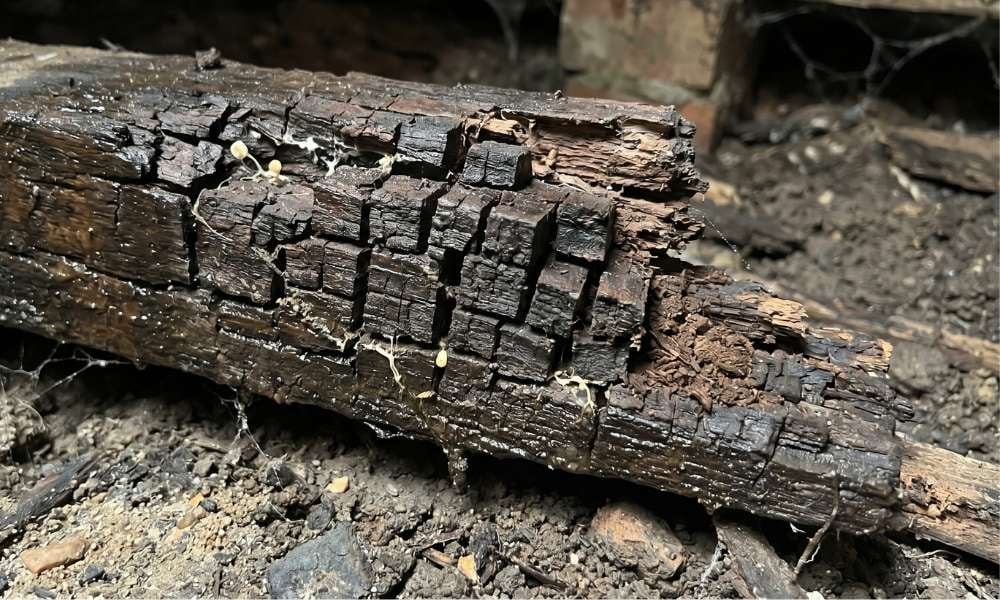
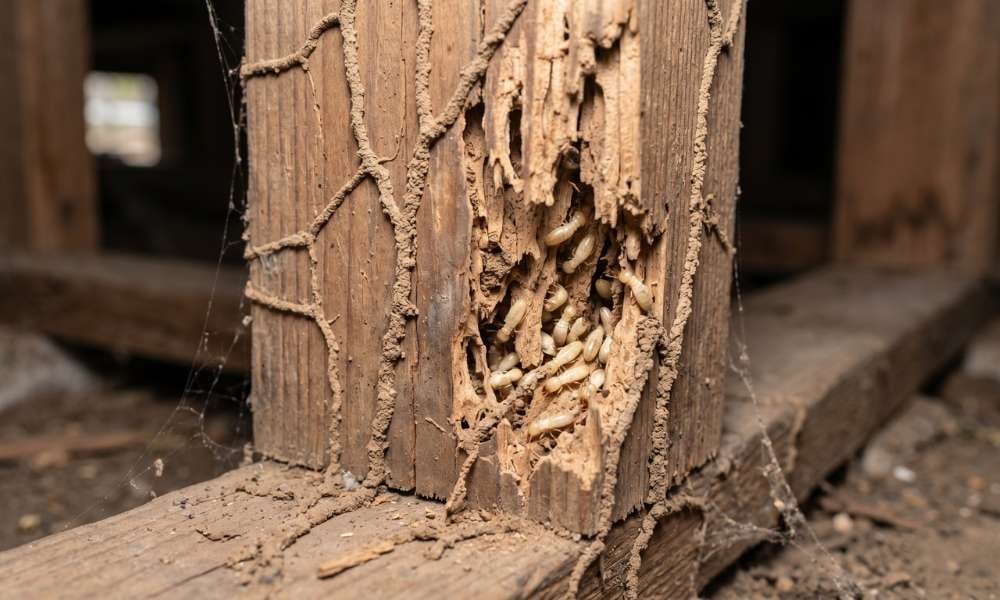
Termites are the primary focus of every inspection and the most destructive timber pest in the region. They work from the inside out and can hollow out structural timber completely before any surface sign appears. Our inspectors use thermal imaging to detect the heat and moisture signatures of active colonies in wall cavities, ceiling spaces and sub-floor areas that are not accessible through visual inspection alone.
Wood-boring insects are common across the Mid North Coast, particularly in older properties with hardwood structural timbers and decorative timber elements. Exit holes and fine powdery frass are the key indicators of borer activity, which our inspectors look for throughout the accessible areas of the building.
The Mid North Coast’s high humidity and rainfall creates conditions where wood rot is a common finding in properties with sub-floor moisture issues, failed wet area waterproofing or deteriorating external timber elements. Wood rot weakens affected timber and creates conditions attractive to termites, making its identification and treatment an important part of a comprehensive timber pest management strategy.
We provide a full range of pest and building inspection services across the Mid North Coast:
We carry out timber pest inspections across the Mid North Coast region, including:
Karuah | Tea Gardens | Hawks Nest | and all surrounding towns and localities across the Mid North Coast region